Jazz by Toni Morrison
Updated: Aug 5
Literature is full of characters who find their way to New York to remake themselves, from Jay Gatsby to Holly Golightly. In Toni Morrison's 1992 novel Jazz, Joe and Violet Trace arrive in Harlem during the Great Migration with hopes of moving past the violence and indignities of the rural South, only to find that the city offers no escape.
I just finished reading Jazz and found it to be dazzling and thought-provoking, just like every other Toni Morrison novel I have read. I picked up this book because I wanted to read more of Morrison's work and also because of when it is set: 1926.
I've been focusing on books that were either written or take place in that year as part of my 2026 reading project. I started in January by re-reading The Sun Also Rises, which Ernest Hemingway published in 1926 (see my earlier blog posts on that book here and here). While Jazz and The Sun Also Rises couldn't be more different in tone, character, setting and plot, they share a preoccupation with trauma, whether from war or generations of slavery.
In keeping with its title, Jazz is improvisational and unconventional, scrambling traditional plot and storytelling, with a shifting narrator who is never identified and not always reliable.
The central characters are Joe and Violet, along with Dorcas Manfred, a young woman with whom Joe has an affair and later kills in a jealous rage. Dorcas is also a transplant to New York with her own backstory that unfolds over the course of the novel.
Jazz is also very much a book about New York itself: its allure, its dangers and its restlessness. I love how Morrison describes the train journey that brought Joe and Violet into the arms of the beckoning city.
They weren't even there yet and already the City was speaking to them ... they stared out the windows for first sight of the City that danced with them, proving already how much it loved them. Like a million more they could hardly wait to get there and love it back.
The major plot points are revealed in the novel's first few pages, with Violet barging into Dorcas's funeral and attacking the girl's corpse, a scandal that reverberates across Harlem — even more so than the murder itself. Morrison uses the rest of the book to unravel each character's history and what led to this tragic love triangle.
In Joe's case, his origin story does not excuse his violence, but we do learn about his upbringing and better understand the forces that shaped him. While he is never prosecuted for killing Dorcas, he is despondent about what he has done and becomes a prisoner in his own mind. In death, Dorcas becomes an object of obsession for Violet, who goes on to form an uneasy friendship with Dorcas's aunt, Alice. There are other unexpected reconciliations in the novel that signify that some healing can be possible even in the worst of circumstances.
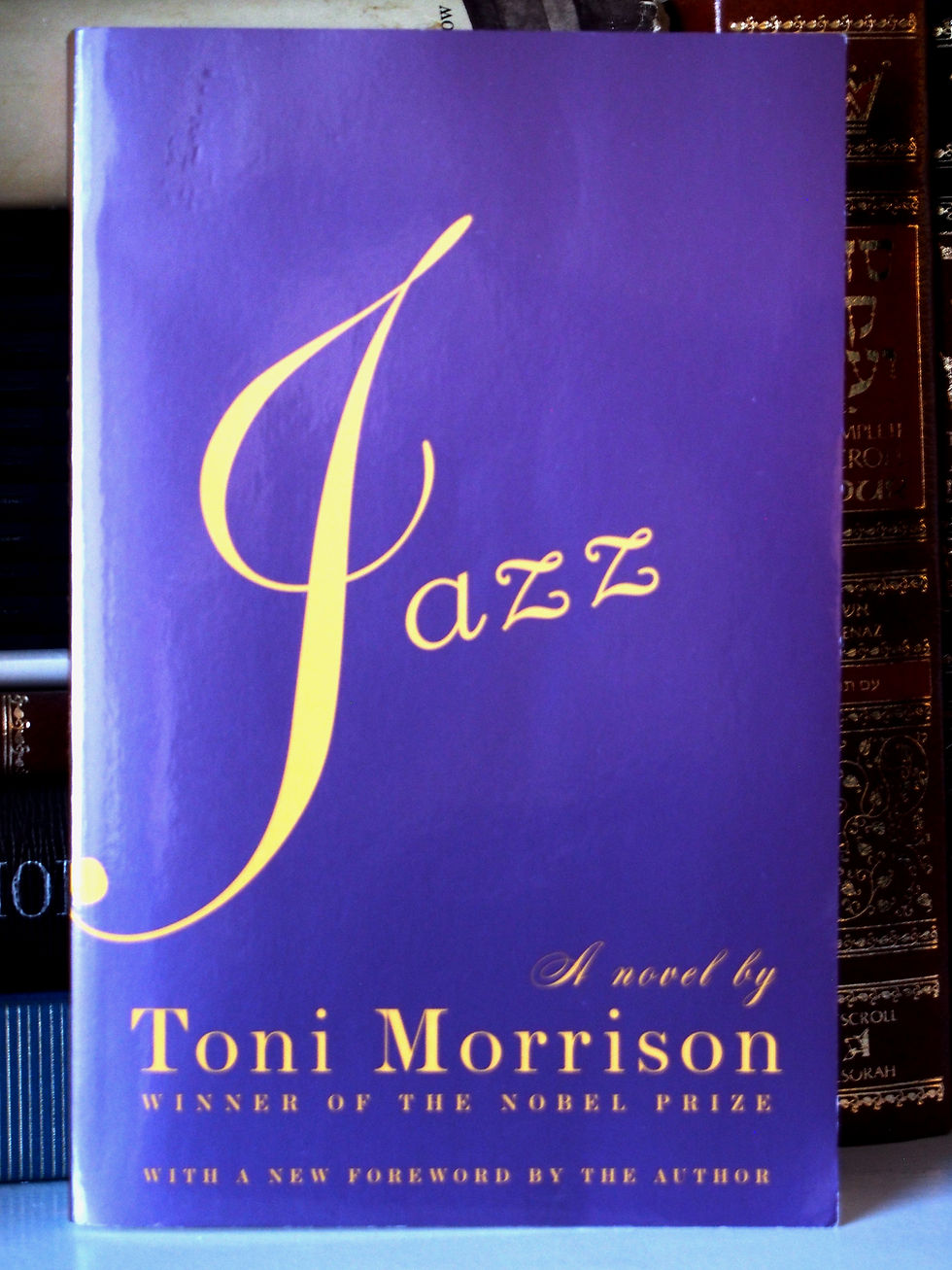
Morrison does something unique in her novels by providing introductory information that offers insight into how she conceived them and background on her writing process. In the foreword to Jazz, she says the genesis for the book was a famous Harlem photographer's image of a girl in a coffin who was believed to have been killed by her lover. Similarly, Morrison was inspired by real-life events in writing her novel Beloved, which also involves a killing. She got the idea from a 19th-century newspaper article about a woman who escaped slavery and took the life of her young daughter rather than see her returned to bondage. Morrison, in the introductory notes to Jazz, also shares her struggles in finding the right opening lines for the novel, which is an unusual admission for a writer, especially a very famous one.
Jazz was reportedly Morrison's favorite of her books, and it is also widely considered to be her most challenging.
I don't always connect with books that shift back and forth in time and narration, and the structure of this one can be hard to follow. It's the kind of novel you need to read more than once to appreciate what it is trying to do. And, as with a jazz composition, you just need to let it take you where it is going.


